The trip is not quite finished when you put the rod down. A little attention at home helps keep grit out of moving parts, wet tackle out of closed boxes and the next outing from starting with an avoidable problem. At Ghosthorn, we want your equipment to fit a routine you can actually maintain. The useful sequence is simple: inspect, clean as directed, dry thoroughly, then put everything in a place where it stays protected.
This is general care guidance for rods, reels, bags and storage. Your particular product's instructions take priority, especially for lubricants, cleaning products, batteries and water exposure. Treat unusual stiffness, cracks or damaged electrical components as reasons to stop and investigate. A quick wipe is helpful maintenance; it is not a repair.
1. Start at the water, before packing the car
Remove visible mud, vegetation and debris before leaving the access point. Check the parts that are easy to overlook: footwear, nets, rod straps, the bottom of a bag and the outside of a bait container. Clean equipment is easier to handle, and this step also helps reduce the chance of moving aquatic invasive species between waters.
Keep hooks and sharp tools secured while you work. Do not leave loose tackle on the ground, even for a moment. Put used lures in a suitable separate container rather than mixing them immediately with dry tackle. That gives you a manageable cleaning task at home and keeps moisture from spreading through the whole box.
Drain retained water where required and follow the rules for bait at your destination. Never move live fish or other organisms from one waterbody to another. The U.S. Fish & Wildlife Service recommends cleaning, draining, drying and disposing of unwanted bait properly. State or local requirements may be more specific, so check them when planning your trip.
2. Inspect the rod with the same care you give the reel
Run your eyes along the blank and inspect the guides, tip and reel seat in good light. Look for cracks, loose fittings or damaged guide surfaces. A small chip in a guide ring can damage line even when the rest of the rod looks fine. If something appears damaged, have it assessed before putting the rod under load again.
Wipe the rod with a soft cloth and use only cleaning methods appropriate to its materials and instructions. Pay attention to places where dirt collects around the handle and reel seat. Avoid abrasive pads and aggressive chemicals. Do not use a bent rod as leverage to free snagged tackle, and do not lift a fish by the rod when a net or other suitable landing method is needed.
For telescopic equipment, keep grit away from the moving sections and follow the specified opening and closing sequence. Clean exposed dirt before collapsing the rod. If a section will not move normally, do not force it or grip a delicate area with tools. A compact packed length is convenient, but the tip and nested sections still need protection from knocks and crushing.
Before storage, check that the rod will not be held in a continuous bend. A rack should support the setup without pressing a guide against a wall or forcing the blank sideways. Our rod-storage guide explains how to choose a location around the actual rod and attached reel.
 Enlarge ↗
3. Clean the reel gently and service it deliberately
Sand, salt and dirt need attention, but the method matters. Follow the reel manufacturer's cleaning instructions. For reels that permit a freshwater rinse, use gentle water rather than a strong jet that can drive contamination into the mechanism. Do not assume that saltwater suitability means a reel can be submerged or pressure-washed.
Wipe the outside, allow the reel to dry and inspect its operation. Turn the handle gently and note any grinding, catching or unusual resistance. If the reel was submerged, suffered an impact or feels wrong after cleaning, consult its service guidance. Adding more oil is not a reliable answer to every noise.
Use the specified lubricant in the specified locations and amounts. Oil and grease have different roles; neither belongs everywhere. Drag systems, seals and bearings can have model-specific requirements. Avoid opening unfamiliar mechanisms without the correct instructions, and use an appropriate service provider when the work is beyond routine maintenance.
“Loosen all drags.”
Take Me Fishing, winter gear-care guidance
That short reminder is useful for extended storage, subject to your reel's instructions. Remember to reset and check the drag before fishing again. A storage setting and a fishing setting serve different purposes.
4. Separate used tackle from tackle ready to fish
Open the day's used-tackle container when you get home. Inspect hooks, split rings, lure bodies and other components for damage. Remove dirt and salt residue using an appropriate method, then allow everything to dry before returning it to a closed tray. Do not leave a damp lure surrounded by dry hooks and expect the box to solve the problem.
Look at your line as well. Fraying, abrasion, kinks and damaged sections deserve attention before the next cast. Replace compromised line or components rather than relying on a previous successful trip as proof they are still sound. Check knots and connections when you rig again; storing a setup neatly does not eliminate the need for a pre-trip inspection.
Swipe or scroll to compare the columns.
| Item | Look for | Next step |
|---|---|---|
| Hooks and rings | Rust, deformation or damaged points | Replace compromised parts; handle sharp points carefully |
| Hard lures | Cracked bodies, loose fittings or damaged lips | Assess and repair or replace as appropriate |
| Soft baits | Damage or material incompatibility | Follow packaging guidance for separate storage |
| Line and leaders | Fraying, abrasion and kinks | Remove damaged sections or replace the line |
Keep different soft-bait materials apart where their packaging calls for it. Some can react with other plastics or storage materials. Leaving them in their original labeled packaging can make both compatibility and identification easier. Dispose of damaged tackle and line responsibly.
5. Empty the bag before deciding it is dry
Take out the trays, clothing, towel and personal items. Open the compartments and check the corners. A bag can feel dry on the front while moisture remains under a box or in a padded pocket. Shake or brush away loose dirt gently, then clean according to the bag's care instructions.
Do not assume a fishing bag is machine-washable. Heat, harsh detergents and aggressive cleaning can affect fabrics, coatings, padding or hardware. Spot cleaning may be appropriate, but the product instructions should guide the method. Check zippers for grit and straps for wear without forcing a jammed fastening.
Let the bag dry with compartments open in a suitable ventilated place. Avoid packing it away while the lining or padding is still damp. Water-resistant fabric helps with some exposure; it does not mean a closed bag will dry itself or that its contents are protected during submersion.
When the bag is ready, put clean, dry equipment back in a consistent arrangement. Our day-on-the-bank packing guide explains a simple layout that separates fishing essentials, personal items and the equipment used on the return journey. Browse Ghosthorn fishing bags by their actual compartments and carrying features.
6. Make drying a stage, not an afterthought
Set aside a place where equipment can dry without being stepped on, knocked over or reached by children or pets. Remove exposed hooks before laying out gear. A towel beneath a wet item may protect a surface temporarily, but replace or remove it when it becomes damp so it does not keep moisture against the equipment.
Keep wet equipment separate from dry storage. Let rods and reels dry before putting them in closed cases. Open tackle trays as appropriate and check their seals and corners. For waders, follow the maker's instructions for cleaning, drying and hanging; avoid folds or pressure that the instructions warn against. Waders are not flotation equipment.
Rechargeable accessories need their own care routine. Follow the supplied charging and water-exposure instructions, keep charging connections dry as directed, and stop using damaged equipment. Do not infer a waterproof rating from an outdoor-use photograph or from the presence of a rubber cover over a port.
Routine drying also differs from the precautions required when moving between waters. The Fish & Wildlife Service's general prevention guidance recommends extended drying and directs anglers to follow applicable local rules. Check the destination's requirements rather than assuming a quick surface wipe meets every situation.
 Enlarge ↗
7. Give dry equipment a stable home
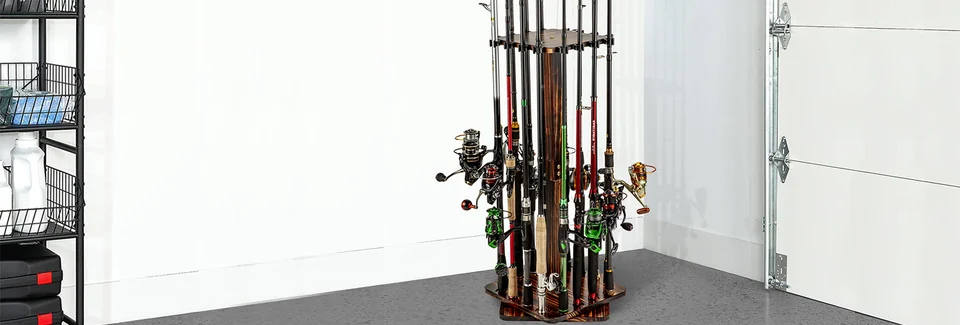
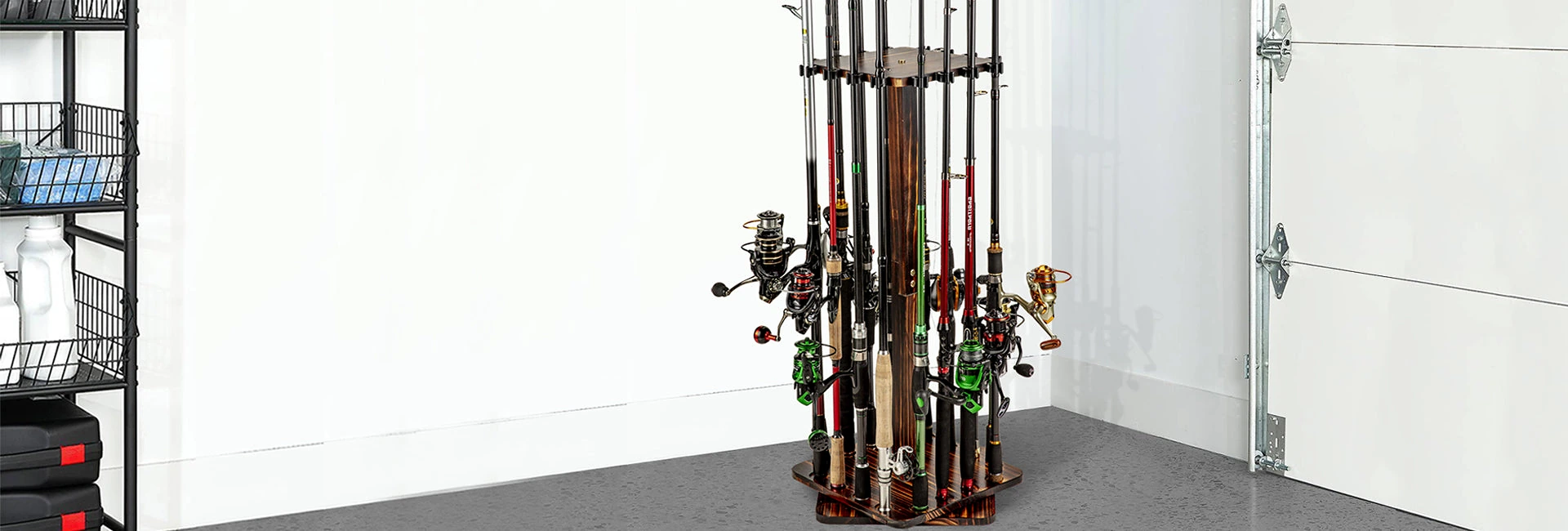
Choose a storage position away from traffic, avoidable impacts and conditions that can damage your equipment. Allow enough clearance for the longest rod, its guides and the attached reel. Check doors, shelving and anything that moves nearby. The empty space above a rack may look sufficient until a garage door opens into it.
With a floor rack, use a stable surface and distribute the load sensibly. With a wall or ceiling system, follow the exact mounting instructions and use fixings suited to the supporting structure. Do not assume included hardware is appropriate for every wall. If you are unsure about the structure or installation, get suitable help before loading the rack.
Published rod capacity is a maximum for the particular design, not a promise that every collection of bulky rod-and-reel combinations will fit without adjustment. Leave enough room to remove one setup without catching its neighbor. Rotate a moving rack slowly and keep the surrounding area clear.
Our rod-storage collection includes different arrangements for different spaces. Choose the layout around your equipment, then keep it dry and inspect it periodically. A storage rack organizes gear; it does not replace cleaning, drying or checking the gear itself.
8. Use a short routine after every trip and a deeper seasonal check
The easiest routine is one you can repeat. Keep the immediate tasks short and visible, then set aside time for any repair or service the inspection identifies. Do not put a damaged item back into the ready-to-go collection without a reminder. Separating it prevents the problem from being rediscovered at the water.
Swipe or scroll to compare the columns.
| When | Useful tasks | Finish when |
|---|---|---|
| Before leaving the water | Secure hooks, remove debris, drain as required and collect litter | Equipment is safe to carry and local requirements are met |
| After the trip | Inspect, clean as directed, empty the bag and separate wet tackle | Everything is ready to dry or be assessed |
| Before storage | Check dryness, organize trays and protect rods | Gear is dry and supported without pressure or crowding |
| Before the next outing | Check line, guides, reel operation, fittings and essentials | The setup is ready for its intended use |
For a longer break, review the relevant instructions for reels, batteries and other accessories. Replace consumables that need replacing, resolve damage, and make a small note of anything still awaiting service. Keep manuals and model details somewhere easy to find.
Good care is less about making equipment look new than keeping its condition understandable. You know what was cleaned, what is dry and what needs attention. That confidence makes the next Ghosthorn outing easier to prepare for—and leaves you free to focus on the water when you arrive.